Could you undermine the entire video game genre system with one skateboard-powered poetry delivery sim?
Video games have a genre problem. They have always had a genre problem. Discussing the genre of a game is a serious thing for serious people to do, and plenty of folks have gotten into surprisingly self-righteous arguments about it over the decades. Before the first-person shooter genre there were only DOOM clones; rogue-likes were replaced with rogue-lites after fans of Rogue and internet arguments had a tantrum, then people started saying rogue-like anyway; someone recently tried to make the word "Metroidbrainia" happen.
SHMUP is short for "shoot 'em up" even though it refers specifically to a top-down spaceship game that scrolls automatically. Or a side-on spaceship game. Or no kind of spaceship game at all. It definitely does not refer to any type of game where you shoot things up in a 3D environment, that would be a 3rd-person shooter. And if there's melee combat, that's also a shooter. But sometimes it's an adventure game; unless you mean an adventure game, which is about pointing and clicking to solve puzzles while someone makes jokes. Or it could be about picking dialogue options while something really sad happens. Add too many numbers to that sadness and it's an RPG, make people take turns and it moves to Japan.
Where did we go wrong? Concepts of genre originated with Plato, as many awful things do.
Poisoned with madness in his childhood by exposure to Socrates, Plato went on later in life to create the first three genres. These were buckets that described appropriate form for different kinds of content: poetry, drama and prose. Aristotle built on these ideas, proposing a way of visualising an artwork's mode, object and medium on an XYZ axis, birthing the genres of epic, tragedy, comedy and parody. Both of these genre systems shared the common goal of classification and exclusion; an important part of categorising media in Ancient Greece was making it clear that if you speak in a certain way or use certain imagery, you were absolutely making a comedy, for example. Including specific types of tragic scene was only for tragedies. Etcetera.

Today our boundaries have expanded and relaxed considerably, criss-crossing genres in a way that deepens the audience's relationship with the art and frees up artists to make more interesting choices. TV shows can be soapy crime dramas, buddy cop thrillers or supernatural conspiracies. Music can be pop, pop-punk, electropop, psychedelic electro-industrial new wave pop, or K-pop. Visual art can be anything at all, shapeless and formless in the void of limitless creative expression.
Genre exists at the end of a 4,000-year-old rope that lets us contextualise and understand the media of today, and yesterday, and an infinite number of days before that. With a bit of genre understanding, you can interpret a caveman's tales of adventure, the aura of a distant future's emotional soundscape, or a 2011 art house film about bees. They're a tool that allows us to experience a text more fully and, at the same time, confidently scan the cultural landscape for similar experiences.
Genre Obscure: Expectation 33
Video games are trapped in a deformed, vestigial branch of the genre system. In contrast to other media, where the goal is to add meaning and context, game genres exist specifically to constrain a game's scope and form. Pick a genre, and then stick to the rules. A real-time strategy game contains a set of approved elements (units, a battlefield, an upgrade tree) and does not contain another set (a central base to protect, scheduled breaks) so it never turns into a tower defence game.
Despite gaining the admiration of millions of gamers for being a good video game, one thing Clair Obscur: Expedition 33 became instantly known for is being a JRPG—a Japanese Role-Playing Game—made by French people. The game was obviously not playing by The Rules from the moment it was first announced, being decidedly not Japanese, but also very much all of the other things that define the genre. The discourse (or "le discours" as it's known in Japan) did not stop Expedition 33 from winning a number of awards, but even after being crowned by some as the Game of the Year Forever 2025, questions of genre continue to orbit the title. Is it even a JRPG if it was made in Europe? Does the attention this game received alter the parameters of the genre itself? Can a JRPG maintain its identity if you add a parry system?
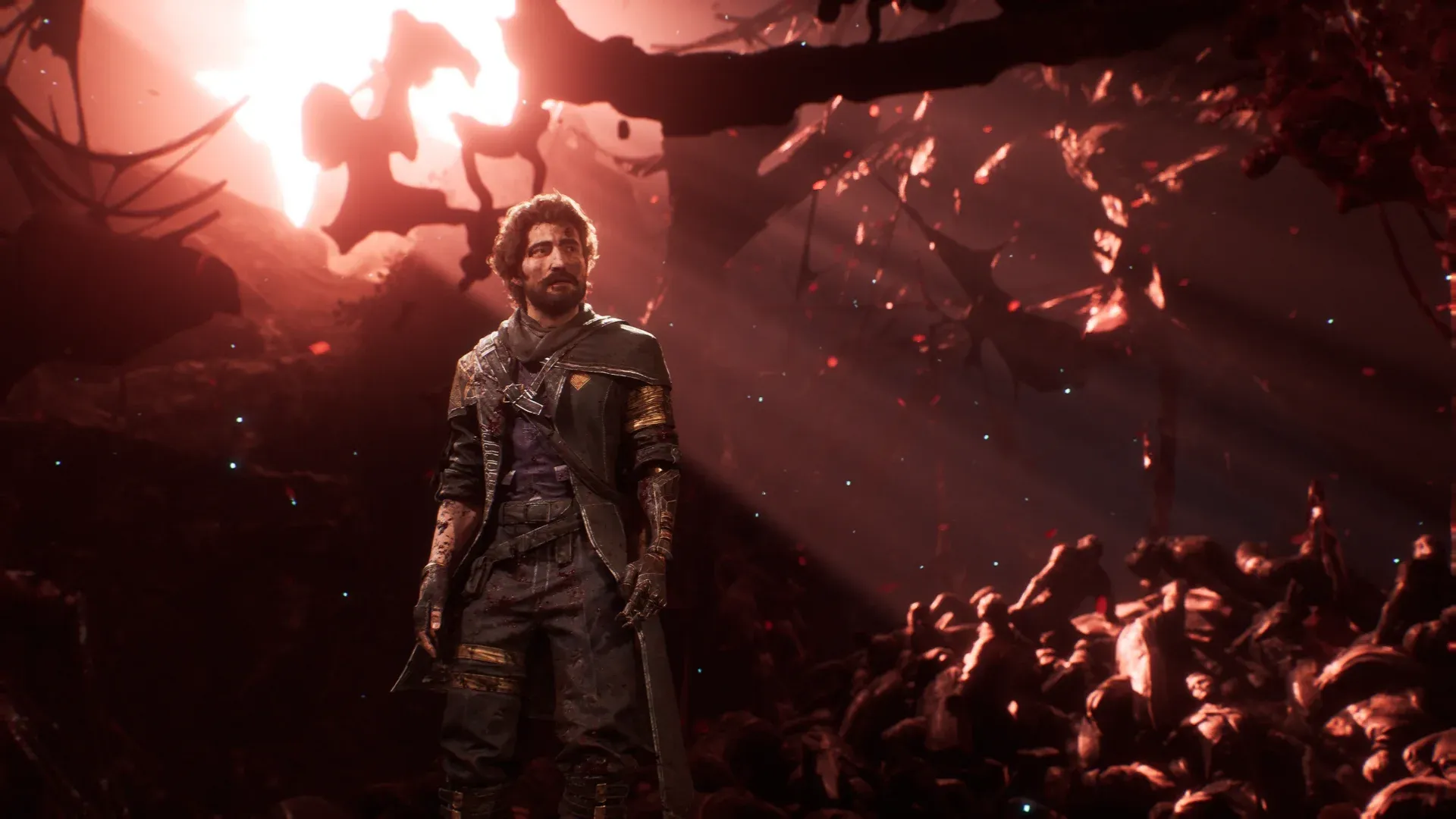
The questions and arguments themselves are worse than meaningless, of course, throwing debris into the road just to obstruct traffic. Final Fantasy VII Rebirth is less of a JRPG than Clair Obscur on mechanical merit alone, with all-but real time battles and the eschewing of combat transitions. Expedition 33 isn't even the first French JRPG; you could play Ubisoft's Child of Light on the PS Vita while sitting in a Parisian café in 2014.
Questions about what is or is not of a specific genre persist in the games industry because the taxonomic clay we're working with is poisoned with purpose. Since video games emerged from the three worlds of physical toys, software and sports, they have always been burdened by a need to function correctly first and foremost. It's not enough that a game exists, tells a story, looks nice, makes fun noises; it has to be here for a measurable and productive reason. A high-end Beyblade must spin very fast, a spreadsheet system must calculate formulas, a football game must conclude in one team's favour after 80 minutes. Along the same lines, a video game must successfully do what that type of video game does. Genre quickly became a way to lay out these practical categories and reassure audiences that a game would function in a certain way. Pong is a sports game made to play like tennis, Tetris is a puzzle game designed to give the player pieces they can arrange to achieve a specific goal. Even as the content of games branched out to include plumbers rescuing princesses, generational vampire hunts and the Earth being invaded by space aliens, the industry's genres remained practical in nature.
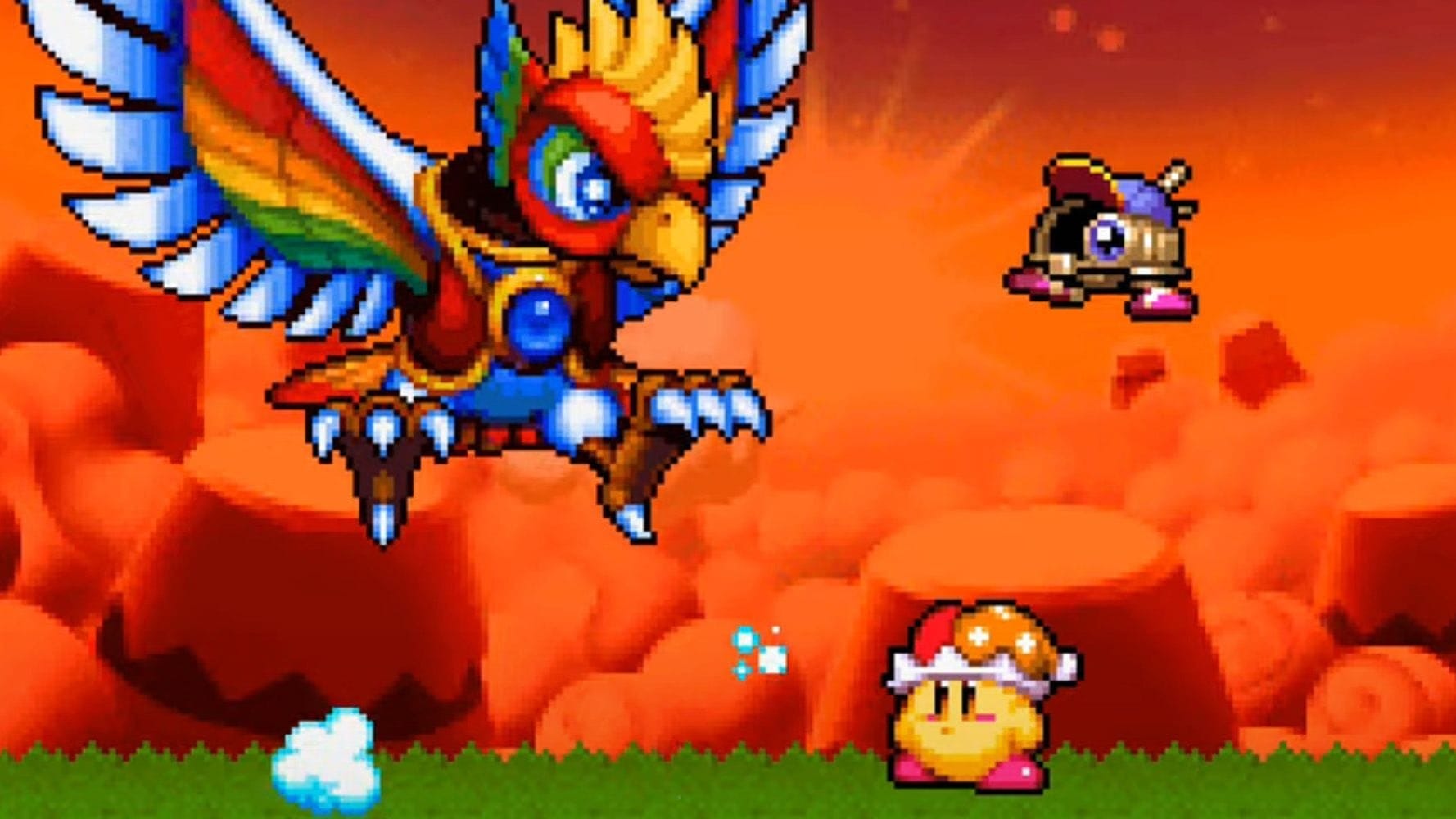
Without much interrogation, you can see the limitations. Super Mario Bros. and Super Mario Bros. 2 are 2D platformers, but provide significantly different experiences—one being the tale of a plumber rescuing a princess, and the other being a story about four friends who pluck turnips from the ground and throw them at genderfluid dinosaurs. Kirby Super Star is also a 2D platformer, wherein a whimsical marshmallow on a foreign planet protects agricultural supplies by eating his enemies and stealing their powers. Thomas Was Alone, a game about the nature of existence and the power of storytelling, is arguably either a 2D platformer, or a puzzle game. Neither of these describe very much about the play experience, which is primarily about listening to British comedian Danny Wallace talk about rectangles.
Summarising how a game functions as the end of the genre discussion is insufficient at best and actively misleading at worst. Few games can be wrapped up in a description of their five most recognisable mechanics, because a game isn't just a piece of software. A video game is art because it seeks to evoke feelings or tell a story, or both, and art can't be labelled only as the sum of the cogs and gears that make it work.
Genre can be described as a recognition of repetition in storytelling. When you begin to recognise the patterns in the way humans tell certain stories, you are picking up the same clues that were originally used to tease out story genres. This is a critical, analytical process that crucially happens after the text. A film is made, the audience recognises familiar patterns, genre finds a natural fit. Marketing departments aside. Function-focused game genres are so potentially damaging because they assert themselves before the text is finished.
We are making a first-person shooter, so it needs to be in the shape of a first-person shooter. I'm buying the latest fighting game, and it had better include all the features I expect in one of those.
The expectations become an albatross around the neck. We get less interesting titles, less varied games, less exciting new concepts to play around with. Last week I watched a video with my fiancée, the premise of which was that Not Every Cosy Game Has Farming Mechanics. With no apparent irony, it then listed 6-7 cosy games with farming mechanics. Is there anything cosy about farming? If you ever met a farmer, you would say no. But enough farm-friendly cosy games gained popularity to define the practical heft of the genre, and once a game genre stinks of specific mechanics it carries them for all eternity.
You mean there's a better way?

As the triple-A partition of the games industry has busied itself with becoming more homogenised and beholden to the existing genre system, smaller studios and individual creators have gone increasingly buck wild. Plucking an example from the thousands of games that come out every month, it's likely that a description of the game's vibes are more instructive of what to expect than any attempt at shoehorning in some coldly mechanical label.
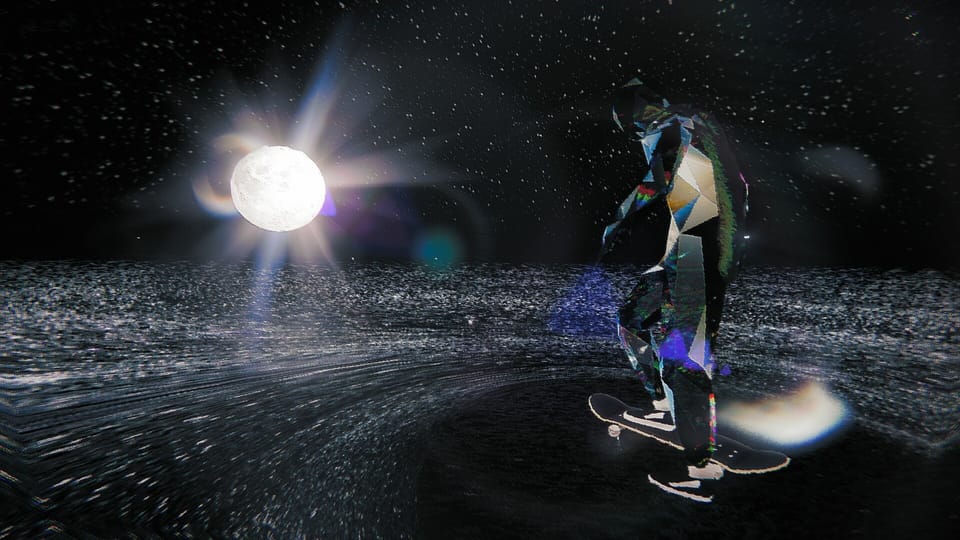
Skate Story, by Sam Eng, could be described as a skateboarding game, in the same sense that The Phantom of the Opera could be considered a story about playing the organ.
Despite a robust and satisfying skating system, with everything a Tony Hawk could ask for, I can't imagine anyone would feel comfortable calling it a sports game. Even reducing it to a skating game seems a little rude. Skate Story opens with a stylised depiction of some type of underworld, casting the player as a demon who wants to eat the moon. Skateboarding is merely presented as the most efficient and logical way to make that happen. As you hurtle toward your goal, obsessing over how delicious the moon will be, you do learn more about skating; but you also learn more about the world, about philosophy, about the nature of rules in modern society and the subjective nature of sin. You meet sad frogs and skeletons, and you make yourself an enemy of the all-seeing eyes that protect good people from demonic skaters. Most of your time in Skate Story is spent skating, but most of your experience is a lot deeper.
What's the genre, then? How do you meaningfully box up something like this, without being reductive or clinical? If we're tearing apart the existing category system then a new framework is required.
Genre as a term more accurately describes the content of a story, rather than the form. The game is a presentation of offbeat musings about freedom of expression through the lens of skating; it is also a mechanical representation of literal skateboarding. Returning to Arisotle-style graphs, we can think of these as the What and How of the game, respectively. The last piece is the Why, the purpose of the game. The third axis describes the emotional reasoning behind the whole experience; in the case of Skate Story, what sort of reaction is supposed to be triggered by playing through a skateboarding game that recites poetry at the end of each chapter instead of giving you a score? In retrospect it seems obvious that the game primarily wants to make you think about things, to be actively philosophical.
What does the game want us to experience?
How is the game presenting the experience to us?
Why does the game exist?
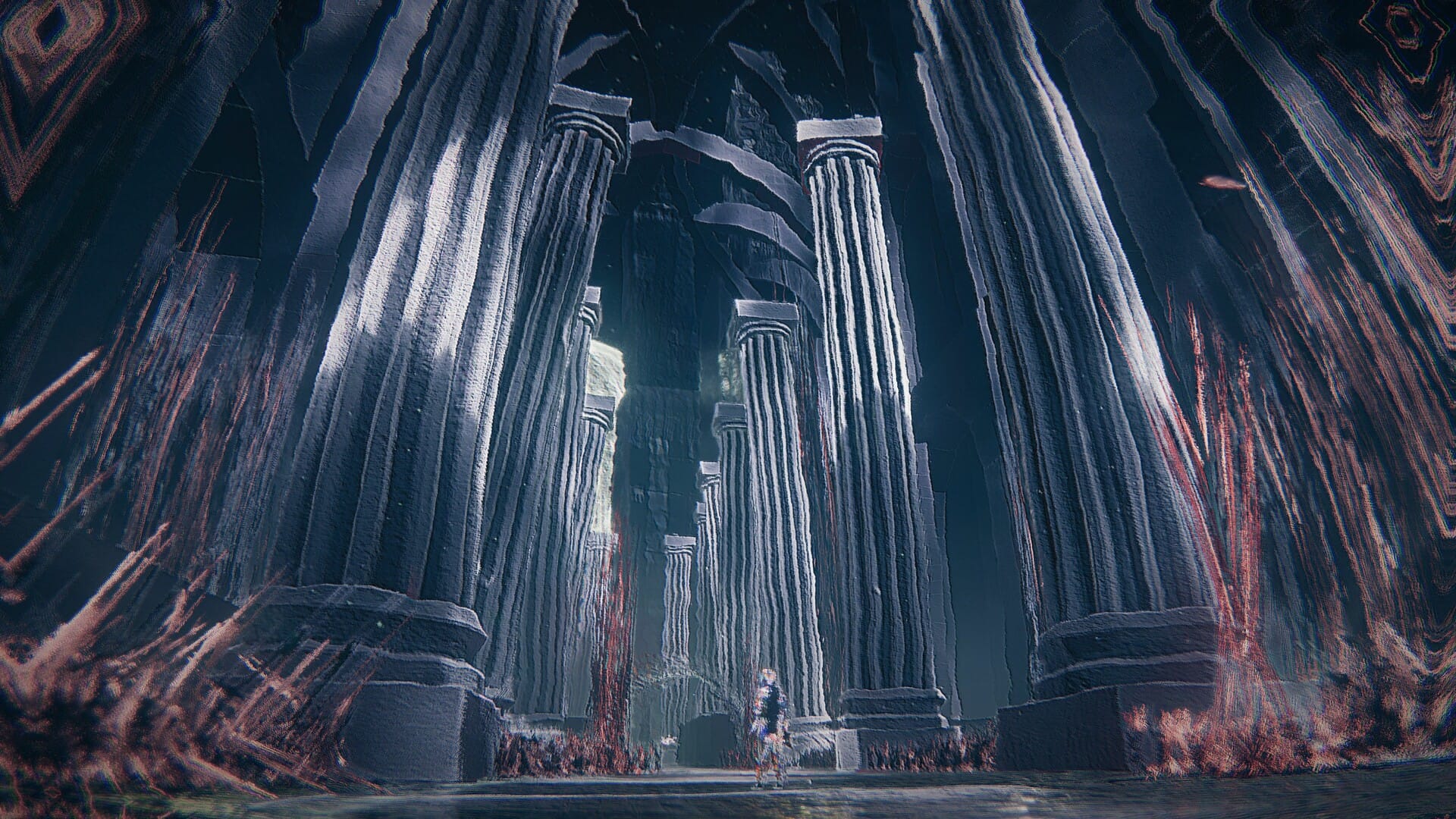
So our first draft of a more malleable genre system could describe Skate Story as an offbeat, philosophical fantasy that uses skating mechanics. Not perfect, but genre isn't meant to be a perfect set of boxes, and it says a lot more than "skateboarding game with a plot" ever could.
This is just an example, of course. The point is that genre needs to cut to the core of what makes an experience worthwhile to the audience, and that always means talking about feelings. Listen to anyone talk about a game they played and it will come around to how they felt while playing. Whether that feeling relates to the mechanics, the narrative, the world-building, the UI, or some other aspect of the design doesn't matter; the intention to deliver an experience and an emotion to the player tells you more about the game than descriptors about permadeath and turn-based combat.
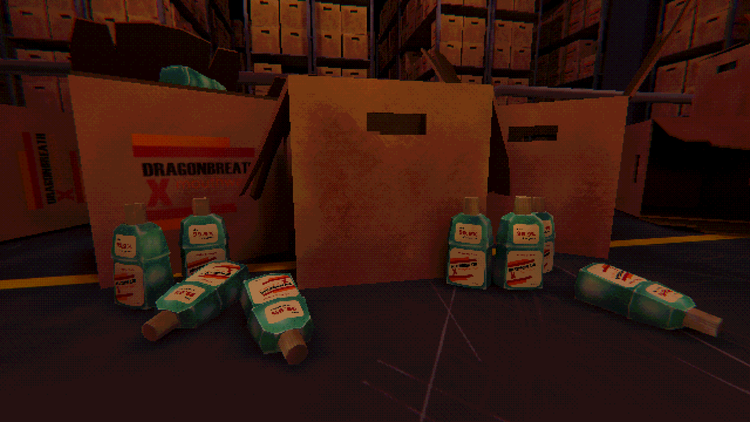
And Skate Story itself is just one example in an ocean of games that increasingly seem to not really care if you can't define them. Disco Elysium is kind of an RPG, sort of an adventure game, but mostly a journey through the contradictions of the human condition. Indika is a bit of a puzzle game, but primarily an interactive exercise designed to ask questions about religion. Mouthwashing could be called a walking simulator if you wanted to be nasty, but the experience of playing is akin to developing claustrophobia and not really much like playing anything.
Arctic Eggs is...
We'll have to come back to Arctic Eggs. I'm positive it's something about using the comfort of physics to... nope, I lost it. Let's just get excited that something so arcane and unfathomable about eggs didn't even ask permission to be here.
Member discussion